Convert any video to HTML5!
EasyHTML5Video creates videos for your website that look amazing on any devices and browsers.
Free DownloadEasyHTML5Video creates videos for your website that look amazing on any devices and browsers.
Free Download
Convert 300+ video formats from well-known AVI and MOV to latest H.265 and VP9

Create HTML5 video in 3 simple steps - drop a file, tune settings, publish

Your video will play in all devices and browsers, including legacy IEs and old Androids/iPhones

Forget about YouTube or paid video hostings. Place videos directly to your server!
HTML5 is the fastest growing web development trend and HTML5 video as a part of HTML5 becomes the new natural way to show video online. iPad, iPhone, Android, all new browsers declare the support for HTML5 video. It's great, but what is the usual route to create HTML5 video? First you need to find converters and make three versions of your video - .OGG, MP4, WebM. Then, to provide the compatibility with IE and old browsers you add a fallback Flash version of your video with Flash video player. And finally, you extract an image for poster and write batch lines of code to combine all of it... Quite complicated?
Forget about it with EasyHTML5Video!
All it takes is 3 easy steps to convert any of your video to HTML5:
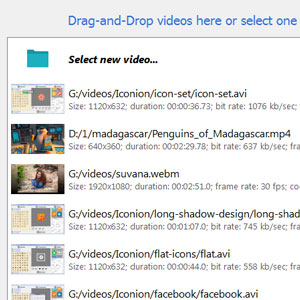
1. Drag-n-drop video file to Easy HTML5 Video;
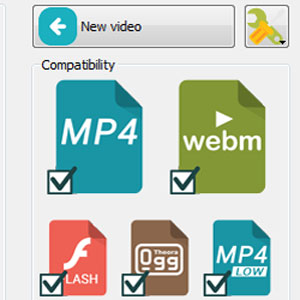
2. Set poster image, select codecs, tune settings;
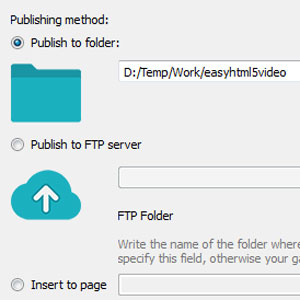
3. Press "Start".
As a result you'll get an html page with all necessary code, images, and videos.
EasyHTML5Video makes your life easier with HTML5 video!

HTML5 with MP4
Flash fallback with MP4

HTML5 with WebM or OGG
HTML5 with OGG
Flash fallback with MP4

HTML5 with WebM or OGG
HTML5 with OGG
Flash fallback with MP4

HTML5 with WebM or OGG
HTML5 with OGG
Flash fallback with MP4

HTML5 with MP4
Flash fallback with MP4

HTML5 with MP4

HTML5 with MP4

HTML5 with MP4

HTML5 with MP4

HTML5 with MP4
While API RP 586 provides a comprehensive framework for RBI, there are challenges and limitations to its implementation, including:
Note: In many industry circles, the practical implementation details are often discussed in tandem with the upcoming API RP 581 (Quantitative Risk-Based Inspection), which provides specific calculation methodologies. However, API RP 586 serves as the comprehensive recommended practice for applying RBI technology consistently.
Use the standardized reporting tables (e.g., Example in Table 3 of the draft) to categorize data.
Her assistant, a fresh-faced engineer named Cole, peered over her shoulder. “How deep?” api rp 586 pdf
“Got a live one,” she said into her comms.
Provides guidance on detecting HTHA in refinery and chemical equipment, transitioning more advanced techniques from API 941 into this specific inspection standard.
Purchase and download authorized PDF copies directly from official platforms like the API Publications Store, IHS Markit (S&P Global), or Techstreet. While API RP 586 provides a comprehensive framework
To access the PDF version of API RP 586, you can try the following:
The Evolution of Asset Integrity: An Analysis of API RP 586 The maintenance of mechanical integrity in the oil, gas, and petrochemical industries is a complex challenge driven by the constant threat of material degradation. American Petroleum Institute (API) Recommended Practice (RP) 586 , titled "Nondestructive Evaluation Methods for Equipment Damage Mechanisms," represents a significant advancement in how facilities manage in-service fixed equipment. Unlike general inspection codes, API RP 586 provides specialized guidance on selecting and applying optimized NDE techniques tailored to specific damage mechanisms.
Risk-based inspection (RBI) is a methodology that helps organizations prioritize their inspection efforts based on the potential risks associated with equipment or systems. RBI is essential in the oil and gas industry, where piping systems are critical to the safe and efficient operation of plants. By identifying potential risks and prioritizing inspections, operators can minimize the likelihood of equipment failure, reduce downtime, and prevent accidents. Her assistant, a fresh-faced engineer named Cole, peered
, titled NDE Methods for Equipment Damage Mechanisms , is a comprehensive recommended practice published by the American Petroleum Institute (API) . It fills a critical structural gap in downstream asset integrity management. Historically, mechanical integrity and NDT guidance were bundled directly inside damage-mechanism standards, such as API RP 941 for high-temperature hydrogen attack (HTHA). API RP 586 unifies, defines, and updates advanced Nondestructive Evaluation (NDE) methods across distinct damage profiles. This ensures that inspection specialists have a technical reference for qualitative screening, quantitative sizing, and gathering data for API 579-1/ASME FFS-1 Fitness-for-Service assessments.
"I have the inspection reports," Elena countered, tapping the stack. "But they’re inconsistent. One inspector calls a weld 'acceptable,' another flags it for repair. We’re drowning in data, but we have no knowledge. I need to standardize how we even approach the risk."
Provides optimized techniques for detecting early-stage HTHA, which was previously a major challenge in the industry.
Easy Html5 Video is free for non-commercial use.
A license fee is required for business use. Easy Html5 Video Business Edition additionally provides an option to remove the EasyHtml5Video.com credit line as well as a feature to put your own logo to videos. After you complete the payment via the secure form, you will receive a license information instantly by email. You can select the most suitable payment method: credit card, bank transfer, check, PayPal etc.
For troubleshooting, feature requests and general help contact us at  . Make sure to include details on your browser, operating system, Easy Html5 Video version, link to your page. In most cases you'll get a reply within 1 business day.
Please read the FAQs first to see if your question has already been answered.