Asian Shemale Contact New -

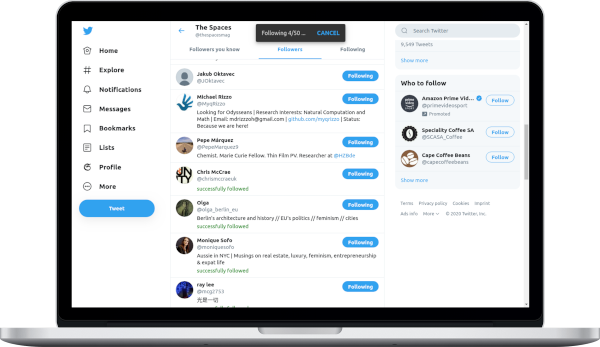
Mass Follow

It works on the followers, following, likes, retweets, list members/subscribers and search view.

Mass Unfollow

It works on your following view.

Mass Like

It works on the list, profile, home and search view. It also works with the advanced search and saved searches.

Mass Unlike

It works on your likes view.

Mass Retweet

It works on the list, search and profile view. It also works with the advanced search and saved searches.

Mass Unretweet

It works on your profile view.

Autopilot

The autopilot performs a series of actions and repeats them after a certain pause.

Superpowers for X

It remembers the mass followed profiles.

So you can later mass unfollow those only.

Unlimited and Ad-Free

PRO Version

Before the famous 1969 Stonewall Riots in New York City, gender-nonconforming individuals led earlier uprisings against police harassment. The 1966 Compton’s Cafeteria Riot in San Francisco, led largely by transgender women and drag queens, marked one of the first recorded collective actions against state oppression in American history. When the Stonewall Riots occurred, figures like Marsha P. Johnson and Sylvia Rivera became foundational icons, cementing the trans community's role at the forefront of liberation. The Evolution of the Acronym

Conversely, many regions are experiencing a wave of restrictive policies. These include bans on gender-affirming care, restrictions on sports participation, and limitations on discussing gender identity in educational institutions.

To support LGBTQ+ culture is to protect the transgender community. When we fight for trans kids to use the right bathroom, for trans adults to access healthcare, and for trans elders to live with dignity, we aren't adding a "T" to an acronym—we are honoring the very people who threw the first bricks at Stonewall.

Access to gender-affirming care—including hormone replacement therapy (HRT), puberty blockers, and surgeries—is a critical component of mental health and well-being for many trans individuals. Navigating healthcare systems remains a major obstacle due to financial barriers, a lack of trained medical providers, and restrictive legislation. Systemic Marginalization

This article explores the deep intersection between the and broader LGBTQ culture , tracing their shared history, unique challenges, and the future they are building together.

Modern LGBTQ+ culture—shaped by events like the Stonewall Uprising (1969)—has always included trans people, particularly trans women of color like Marsha P. Johnson and Sylvia Rivera. However, for decades, mainstream gay and lesbian rights movements often sidelined trans issues to appear more "palatable." Since the 2010s, there has been a powerful correction: a recognition that . This has led to more inclusive language (e.g., LGBTQIA+) and activism.

: Many Asian countries, particularly Thailand, have become global centers for gender-affirming healthcare. This has fostered a large community of medical professionals and support groups dedicated to transition-related care and wellness. For those seeking information on health and transition, international standards provided by organizations like the World Professional Association for Transgender Health (WPATH) serve as a foundational resource.

A: Start by treating her with the same respect you would anyone. Don't lead with questions about her body or surgical history. A great starting point is the GENIE approach :

Changelog

Asian Shemale Contact New -

Before the famous 1969 Stonewall Riots in New York City, gender-nonconforming individuals led earlier uprisings against police harassment. The 1966 Compton’s Cafeteria Riot in San Francisco, led largely by transgender women and drag queens, marked one of the first recorded collective actions against state oppression in American history. When the Stonewall Riots occurred, figures like Marsha P. Johnson and Sylvia Rivera became foundational icons, cementing the trans community's role at the forefront of liberation. The Evolution of the Acronym

Conversely, many regions are experiencing a wave of restrictive policies. These include bans on gender-affirming care, restrictions on sports participation, and limitations on discussing gender identity in educational institutions.

To support LGBTQ+ culture is to protect the transgender community. When we fight for trans kids to use the right bathroom, for trans adults to access healthcare, and for trans elders to live with dignity, we aren't adding a "T" to an acronym—we are honoring the very people who threw the first bricks at Stonewall. asian shemale contact new

Access to gender-affirming care—including hormone replacement therapy (HRT), puberty blockers, and surgeries—is a critical component of mental health and well-being for many trans individuals. Navigating healthcare systems remains a major obstacle due to financial barriers, a lack of trained medical providers, and restrictive legislation. Systemic Marginalization

This article explores the deep intersection between the and broader LGBTQ culture , tracing their shared history, unique challenges, and the future they are building together. Before the famous 1969 Stonewall Riots in New

Modern LGBTQ+ culture—shaped by events like the Stonewall Uprising (1969)—has always included trans people, particularly trans women of color like Marsha P. Johnson and Sylvia Rivera. However, for decades, mainstream gay and lesbian rights movements often sidelined trans issues to appear more "palatable." Since the 2010s, there has been a powerful correction: a recognition that . This has led to more inclusive language (e.g., LGBTQIA+) and activism.

: Many Asian countries, particularly Thailand, have become global centers for gender-affirming healthcare. This has fostered a large community of medical professionals and support groups dedicated to transition-related care and wellness. For those seeking information on health and transition, international standards provided by organizations like the World Professional Association for Transgender Health (WPATH) serve as a foundational resource. To support LGBTQ+ culture is to protect the

A: Start by treating her with the same respect you would anyone. Don't lead with questions about her body or surgical history. A great starting point is the GENIE approach :

Version 76

  • It works on the events view

Version 75

  • It works on the topics view
View all changelog entries