Unstable netwrok connection The app might be slower than usual
Ats-20 Radio Manual Page
Spin the Tuning Encoder until you locate a station. Adjust the volume using the analog wheel. 🛠️ Advanced Operations: Tuning SSB
Many ATS-20 units ship with "Soft Mute" enabled. This silences the audio when no strong signal is present, creating an annoying "pumping" sound.
Press the STEP button to cycle through tuning increments. Available steps change based on the mode (e.g., 1kHz, 5kHz, 9kHz, 10kHz for AM/SW; 100kHz for FM). Selecting Bands
For , fully extend the antenna. Experiment with tilting it at a 45-degree angle to change its polarization relative to the incoming signal. Connecting External Antennas
If you want to customize your device further, you can look into the open-source community online. Many enthusiasts update the ATS-20 firmware via the Arduino IDE to unlock custom band plans, smoother step adjustments, and better screen layouts.
This guide provides a comprehensive overview of the . The is a compact (approx.
Understanding the physical layout of the ATS-20 is crucial for smooth navigation. Front Panel Controls
Press B2 (STEP) to select a small frequency step, preferably 1 kHz.
Operating the ATS-20 involves navigating a simple interface of buttons and a rotary encoder.
Before diving into the button sequences, let's identify which model you have.
The defining feature of the ATS-20 is its ability to decode Single Sideband (SSB) signals, which are widely used by ham radio operators, maritime traffic, and utility stations. Activating SSB Mode Switch to the band using the BAND button.
Most ATS-20 units use a and a few tactile buttons for navigation.
Displays the current frequency, signal strength (RSSI), signal-to-noise ratio (SNR), step size, bandwidth, volume, and battery status.
Download Video, Reels, Photo, IGTV, carousel from Instagram
Download Instagram Videos Fast and Free With SnapInst
You are on Instagram. You see a reel, a story, or a video that you need to download for your personal use.
Then comes the problem there is no save button, no download option, and no screen recording? That is a messy
workaround.
That is why Snapinst exists.
We provide a hassle-free method for downloading content from Instagram. No apps. No spam. No
login.
Just paste the link, press download button, and you have got the video without watermark in the most plain and simple way.
HOW IT WORKS
1
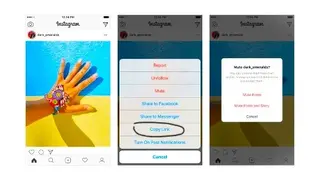
Copy the Link
On Instagram, tap the three dots on any reel, story, post, or IGTV video and hit “Copy Link.” ats-20 radio manual
2
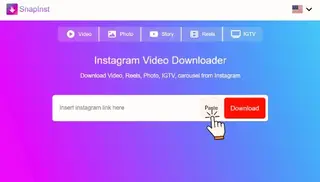
Paste It Here
Visit Snapinst. Paste the link that you have copied in the box above.
3
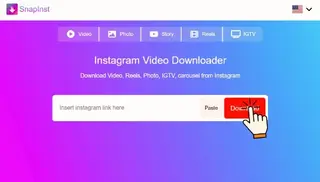
Download What You Need
We will show you the result. Choose the image or video, click download, and you are done.
IGTV Downloader lets you easily save and share Instagram TV videos.
Highlight Backup
Download story highlights from public profiles without login
Quick Downloads, No Delays
Click. Save. Done.
That is how downloading should feel. With Snapinst, you do not wait around or guess which button actually
works. You paste
the link, press download, and your video or image is ready. Whether it is a reel, a story, or a photo —
everything is
instant. No spinning wheels. No fake links. No drama.
Compatibility Across All Devices
Whether you are scrolling on your phone, working on a laptop, or using a tablet — Snapinst works with all. If
your device has a browser, you are set. There is nothing to install and no setup to worry about. It works,
plain and
simple. Just the way you expect it to.
High-Quality Downloads Guaranteed
We do not change your content. No filters, no resizing, no compression. What you download is exactly what was
posted. That
means clear video, sharp photos, and nothing lost in the process. If it looks good on Instagram, it will look
the same in
your downloads.
Enhanced Privacy and Security
Snapinst does not ask for your name, email, or anything else. You are not here to sign up — you are here to
save content.
We keep it that way. No forms. No logins. No hidden trackers. What you download is your business, and it stays
that way.
Spin the Tuning Encoder until you locate a station. Adjust the volume using the analog wheel. 🛠️ Advanced Operations: Tuning SSB
Many ATS-20 units ship with "Soft Mute" enabled. This silences the audio when no strong signal is present, creating an annoying "pumping" sound.
Press the STEP button to cycle through tuning increments. Available steps change based on the mode (e.g., 1kHz, 5kHz, 9kHz, 10kHz for AM/SW; 100kHz for FM). Selecting Bands
For , fully extend the antenna. Experiment with tilting it at a 45-degree angle to change its polarization relative to the incoming signal. Connecting External Antennas
If you want to customize your device further, you can look into the open-source community online. Many enthusiasts update the ATS-20 firmware via the Arduino IDE to unlock custom band plans, smoother step adjustments, and better screen layouts.
This guide provides a comprehensive overview of the . The is a compact (approx.
Understanding the physical layout of the ATS-20 is crucial for smooth navigation. Front Panel Controls
Press B2 (STEP) to select a small frequency step, preferably 1 kHz.
Operating the ATS-20 involves navigating a simple interface of buttons and a rotary encoder.
Before diving into the button sequences, let's identify which model you have.
The defining feature of the ATS-20 is its ability to decode Single Sideband (SSB) signals, which are widely used by ham radio operators, maritime traffic, and utility stations. Activating SSB Mode Switch to the band using the BAND button.
Most ATS-20 units use a and a few tactile buttons for navigation.
Displays the current frequency, signal strength (RSSI), signal-to-noise ratio (SNR), step size, bandwidth, volume, and battery status.


 Story
Story